A rigorous and inspiring programme that nurtures independent thinking, hands-on learning, research, and innovation in physics.
Head of Department
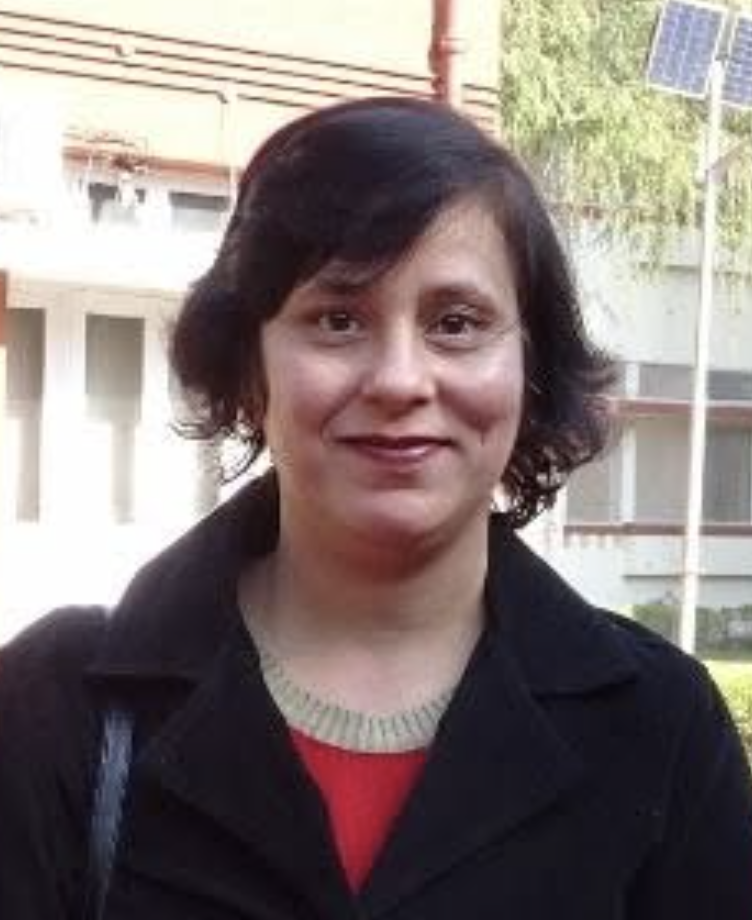
Dr. Sangeeta Sachdeva
Overview
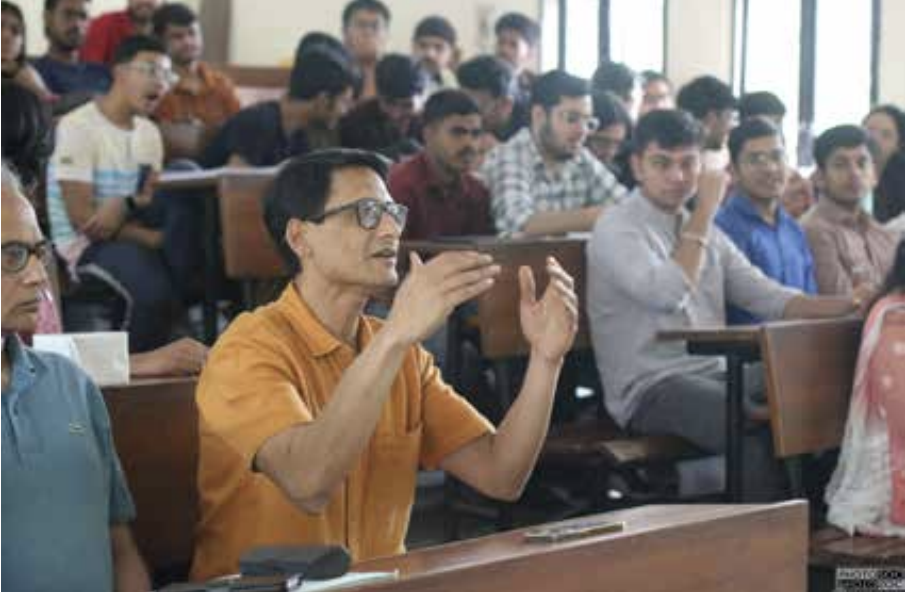
The Physics Honours course at St. Stephen’s is designed to train students to become physicists through a rigorous and well-rounded curriculum. What distinguishes the study of physics here is the dedication of the teachers, the exceptional calibre of the students, and the unique intellectual atmosphere of the college. Teachers inspire students to learn honestly, think independently, and develop the confidence to create rather than merely reproduce. A strong culture of mentorship further enriches this experience, with senior students actively guiding and supporting their juniors. In addition, the Physics Society, the Feynman Club, the Astronomy Club, and the Electronics Society offer opportunities beyond the classroom to engage with physics through lectures, discussions, and hands-on exploration.
Teaching and Learning
The programme offers a balanced blend of theoretical and practical learning. Theoretical courses encourage both mathematical rigor and intuitive understanding, while laboratory courses include standard physics experiments as well as advanced areas such as electronics, microprocessors, and computational methods. Students are encouraged to connect experiments with theoretical concepts, perform careful error analysis, and at times even design their own experiments. The department also supports students in undertaking projects beyond the formal curriculum, fostering innovation and a spirit of research. Teachers adopt innovative approaches in their classrooms and continually update their knowledge, inspired by the high calibre of students and the stimulating academic atmosphere of the college. The department houses the Centre for Theoretical Physics, where students can take on research projects like working on Exoplanet Archival Data. The Centre for Experimental Physics provides state-of-the-art instruments for developing ceramic materials, nanoparticles, and thin films, supported by sophisticated measurement and characterization tools. Facilities for vacuum and low-temperature (liquid nitrogen) experiments enable students to engage in original and cutting-edge research.
Course Structure
The B.Sc. (Hons.) Physics at St. Stephen’s College, designed in accordance with the Undergraduate Curriculum Framework (UGCF) 2022, offers a structured yet flexible approach to undergraduate education. The four-year curriculum consists of Discipline Specific Core (DSC) courses, covering fundamental and advanced topics such as Classical Mechanics, Electromagnetic Theory, Quantum Mechanics, Statistical Mechanics, Solid State Physics, Optics, Electronics, and Computational Physics. In addition, students will have to take Discipline Specific Elective (DSE) courses, as per university norms. These electives allow students to explore specialized areas such as Advanced Quantum Mechanics, Advanced Mathematical Physics, Nuclear and Particle Physics, Astrophysics, Nanoscience, Physics of Materials, and Microprocessors, enabling them to pursue their individual interests within the discipline. Students who pursue the fourth year will have the opportunity to undertake a dissertation or opt for academic projects/ entrepreneurship. This well-rounded structure ensures that students gain theoretical, experimental, computational, and interdisciplinary knowledge, preparing them for higher studies, research, and industry careers.
Career progression/Scope
The Physics Honours course equips students with both deep theoretical knowledge and practical skills, preparing them for diverse career paths in academia, research, and industry. Hands-on experience with advanced instruments and electronics, along with opportunities to work on innovative projects like building drones, electronic voting machines, and gesture-controlled robots, provides students with technical expertise. Workshops on microcontroller-based Arduino kits and sensor applications further enhance their practical abilities. Exposure to national labs, observatories, and real-world scientific environments broadens their horizons and helps them build strong professional networks. The programme’s emphasis on independent thinking, research, and creative problem-solving ensures that graduates are well-prepared for higher studies and careers in physics, engineering, data science, and beyond. The combination of classroom learning, research opportunities, and extracurricular engagement creates well-rounded individuals ready to make meaningful contributions in their chosen fields. Building on this strong foundation, graduates of the Department of Physics at St. Stephen’s College go on to pursue higher studies at leading universities across the world, including the University of Oxford, the University of Cambridge, École Polytechnique, the University of Edinburgh, the University of Bonn, the University of Cologne, etc. Many students receive support through competitive scholarships such as the Rhodes Scholarship, Erasmus Mundus Programme, Gates Cambridge Scholarship, Commonwealth Scholarship, Inlaks Scholarship, etc. Within India, graduates continue their academic and research journeys at institutions such as the Tata Institute of Fundamental Research (TIFR), Indian Institute of Science (IISc), the Indian Institutes of Science Education and Research (IISERs), and the Indian Institutes of Technology (IITs).